Where to Put a Tapestry in the Room: The Ultimate List of 10 Tapestry-Worthy Places
Tapestries have long served as more than just decorative accents. They are statements of artistry, history, and personal style, capable of transforming any space. Their unique ability to introduce color, texture, and narrative to a room is unparalleled.
Unlike framed prints or paintings, the soft, textile nature of a tapestry brings a unique warmth and acoustic property to a room. It effectively absorbs sound and softens harsh lines.
Finding the ideal place to put a tapestry within a room can dramatically enhance an aesthetic and functional appeal. With that in mind, let’s explore how to choose the perfect spot to showcase your tapestry and elevate your space.
10 Strategic Placements for Tapestries in Your Room
Integrating a tapestry effectively into a room's design involves more than simply hanging it on an empty wall. Thoughtful placement transforms a room, making the tapestry a key element of the decor.
The choice of pattern can greatly influence the mood. For example, a classic Belgian Tapestry might evoke a sense of timeless elegance, while a Verdure Tapestry could bring a touch of nature.
However, it’s worth noting that each strategic location offers distinct advantages, contributing to the room's overall balance, aesthetic appeal, and functionality.
Here are some of the most effective ways to position a tapestry in a room:
- Above a Sofa or Bed: A classic focal point.
- Behind the Headboard: An artistic backdrop.
- As a Room Divider: Softly defining spaces.
- To Frame a Window or Doorway: Enhancing architectural features.
- On the Ceiling: An unexpected artistic canopy.
- In a Hallway or Entryway: A welcoming statement.
- Creating a Gallery Wall: Adding texture and depth.
- In a Dining Area: Elevating the culinary experience.
- As a Statement Piece in a Minimalist Setting: Introducing warmth.
- On an Architectural Feature: Highlighting unique elements.
Now, let’s dive into each of these ideas and explore how to make the most of them in your space.
1. Above a Sofa or Bed: The Classic Focal Point

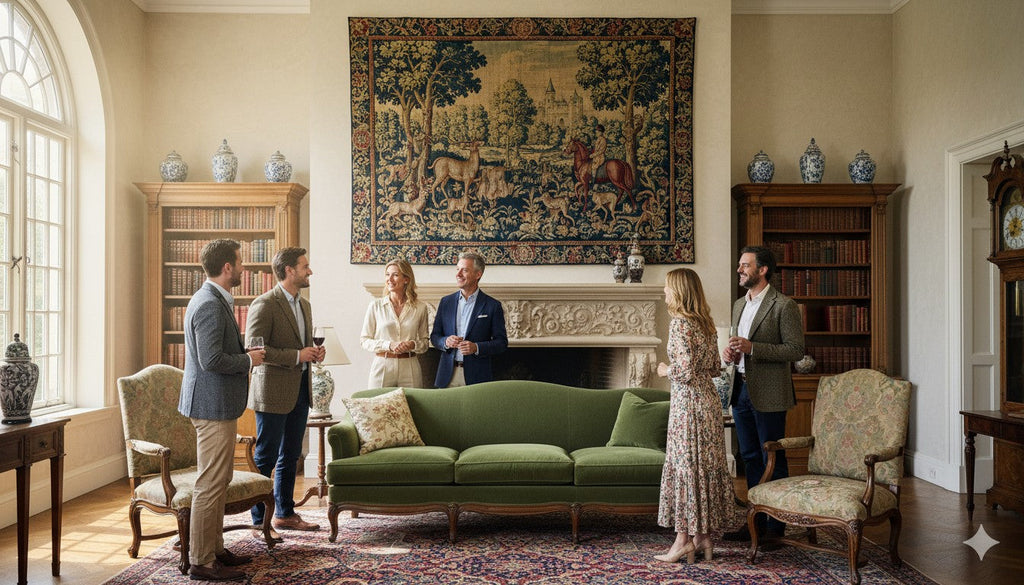
One of the most popular placements for a tapestry is directly above a sofa or over a headboard. This spot immediately draws the eye, making the tapestry the room’s dominant focal point.
Its soft, rich textures contrast beautifully with the furniture below, creating a layered, inviting look.
In both living rooms and bedrooms, a well-placed tapestry can completely transform the mood of the space:
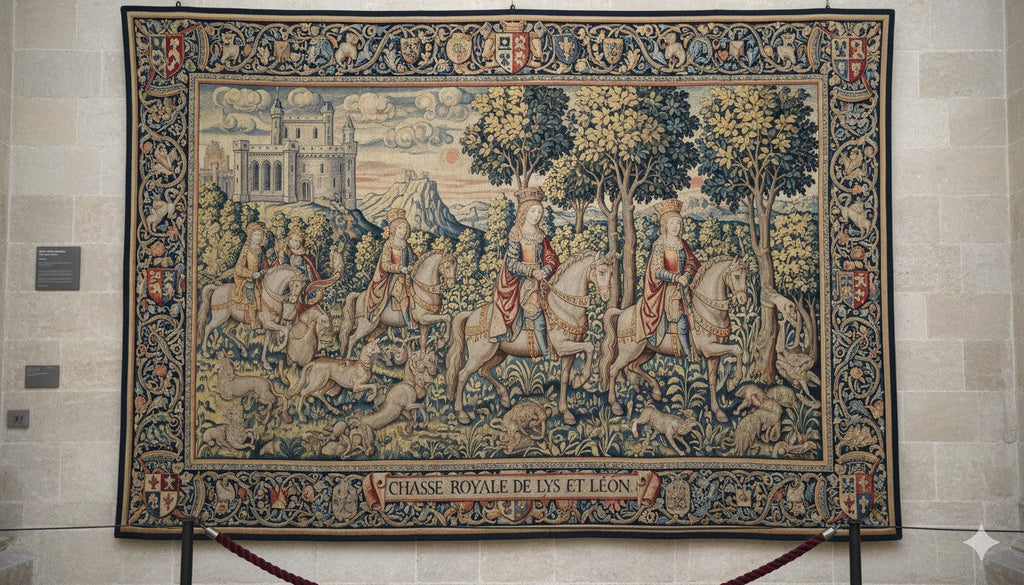
● Living room: A large tapestry can ground the seating area, defining it as a cozy conversation zone. People often opt for grand French tapestries, as most of that artwork is considered a true centerpiece of a home.
● Bedroom: It can replace a traditional headboard, adding a grand, romantic touch that enhances comfort and visual interest. Landscape tapestries are some of the most common and best choices for bedrooms.
A richly detailed piece often found among Middle Age tapestries can also serve as a conversation starter, tying the whole room together.
Tip for placement: When decorating your room with wall-hanging tapestries, ensure the tapestry is at least two-thirds the width of the furniture piece beneath it. This achieves a balanced aesthetic.
2. Behind the Headboard: An Artistic Backrest

A tapestry doesn’t have to hang above the bed; it can sit directly behind the headboard, creating a soft, textile backdrop for the entire sleeping area. This setup adds depth, warmth, and texture, giving the room a layered, designer feel.
How to style it:
● As a headboard alternative: Replace a traditional headboard entirely for a bold, artistic statement.
● With a low-profile headboard: Let the tapestry add height and vertical interest without overwhelming the space.
Tapestries with intricate patterns or calming landscapes work beautifully here, transforming the bed into a cozy, luxurious alcove.
3. As a Room Divider: Defining Spaces with Softness

In open-plan areas or studios, a tapestry can double as an elegant, flexible room divider. Instead of using rigid screens or walls, hanging a tapestry from the ceiling creates a softer, more visually appealing separation while keeping the space open and light.
How to use it:
● Between zones: Separate a dining area from a living space or carve out a private reading nook without blocking light.
● For comfort: The fabric helps absorb sound, making each zone feel cozier and more intimate.
Choose a tapestry with a design that looks good from both sides to maintain a sense of harmony and flow throughout the room.
For example, some of the tapestries that are making a huge comeback are the very well-known Bayeux tapestries, and they fit most interiors just perfectly. A choice surely worth considering.
4. To Frame a Window or Doorway: Enhancing Architectural Features

Hanging tapestries on either side of a window or doorway, similar to drapes, can highlight and soften architectural features. This setup adds grandeur, color, and texture, framing a view or entryway without blocking light.
How to style it:
● For large windows: Use two symmetrical tapestries to create a majestic frame that enhances the natural light.
● For smaller spaces: A single piece beside a window can define a cozy reading nook or accent corner.
This approach also offers a chance to complement existing curtains or introduce an entirely new visual statement in the room.
5. On the Ceiling: An Unexpected Artistic Canopy

For a bold and imaginative display, consider hanging a tapestry on the ceiling. It turns an ordinary surface into an artistic canopy, creating an immersive, dreamlike atmosphere, especially beautiful in bedrooms.
To take the ceiling grandeur to the next level, the art of your choice might as well be one of the pieces from castle or monument tapestries, famous for the strong impressions they leave.
Our choice would be either the View of Neuschwanstein Castle or The Coliseum Rome tapestry, but there are plenty more available for everyone’s taste.
How to style it:
● In bedrooms: Use a lightweight tapestry to add warmth and softness above the bed.
● In large living areas: It introduces a unique architectural element and draws the eye upward.
Make sure the tapestry is securely fastened and choose materials that are safe and easy to mount. This setup not only changes how you view the artwork but also softens overhead lighting, wrapping the room in a gentle glow.
6. In a Hallway or Entryway: The Welcoming Statement

Hallways and entryways are often overlooked, but a well-placed tapestry can instantly make these spaces feel warm and inviting.
When you were on vacation, you probably saw tapestries in hotel halls, and this is not something that happens by accident. Hoteliers know how wall tapestries improve hotel hospitality , so it’s clear that your halls might benefit from them as well.
It creates a lasting first impression for guests and adds visual depth as one moves through the home.
How to style it:
● In narrow hallways: Choose a tropical or exotic tapestry to make the area feel lighter, wider, and less tunnel-like.
● In spacious entryways: A larger tapestry can act as a grand introduction to your home’s style while softening echoes from hard surfaces.
This simple addition turns a transitional space into a memorable design feature.
7. Creating a Gallery Wall: Adding Texture and Depth

While often associated with framed art, gallery walls can greatly benefit from the inclusion of a tapestry. Integrating a tapestry amongst paintings, prints, and photographs adds a crucial element of texture. It breaks the visual monotony of flat surfaces.
How to style it:
● As a centerpiece: Use a small tapestry as the central anchor, arranging other artworks around it.
● Within a larger mix: Let the textile piece add softness and contrast among paintings and photographs.
The tactile quality of a tapestry transforms a standard gallery wall into a rich, multidimensional showcase.
8. In a Dining Area: Elevating the Culinary Experience

A tapestry in the dining room can instantly elevate the space from functional to refined. When placed on a prominent wall, it creates a sophisticated backdrop that enhances the ambiance during meals and gatherings.
How to style it:
● For grandeur: Choose a large tapestry to bring an expansive, elegant feel to the room.
● For intimacy: Opt for a smaller, detailed design to add warmth and charm to cozy dinners.
Consider a design that evokes a sense of plenty, like one of the 18th-century tapestries, for a harmonious dining environment.
The Labors of Hercules and Audience of the Prince are safe bets for striking a sense of plenty.
9. As a Statement Piece in a Minimalist Setting: Adding Warmth

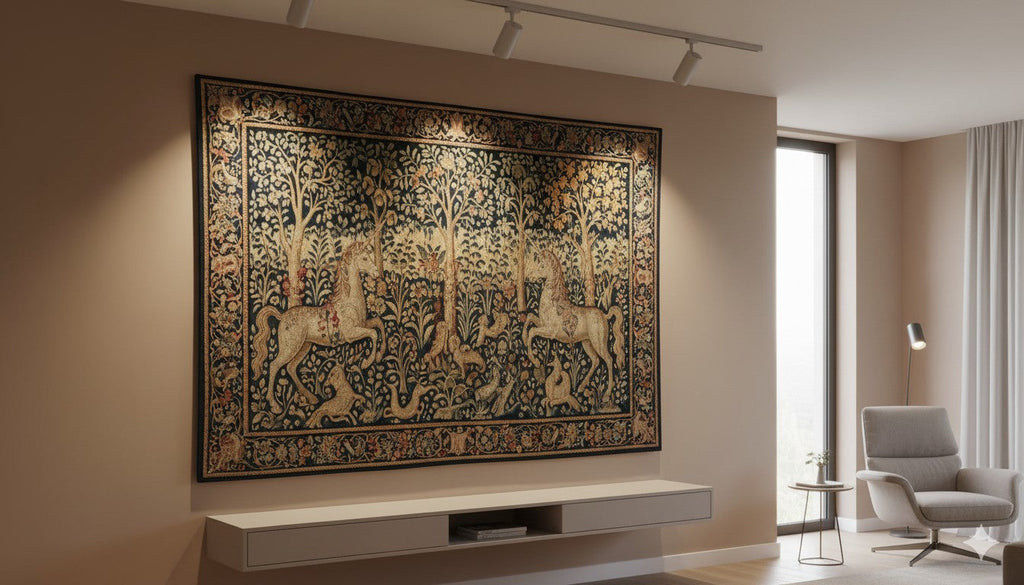
In rooms with minimalist decor, where simplicity and clean lines reign, a Modern art tapestry can introduce much-needed warmth, character, and artistic flair. It becomes a vibrant focal point that brings life to the room.
It’s worth mentioning, though, that some carefully chosen vintage tapestries mix well with modern interiors , so you don’t have to necessarily stick only with contemporary art.
How to style it:
● Choose one standout piece with rich texture or bold color to soften bare walls.
● Let it add depth and personality while maintaining the balance and restraint of minimalist design.
This approach proves that even one carefully chosen artwork can transform a minimalist room into something warm, expressive, and memorable.
10. On an Architectural Feature: Highlighting Unique Elements

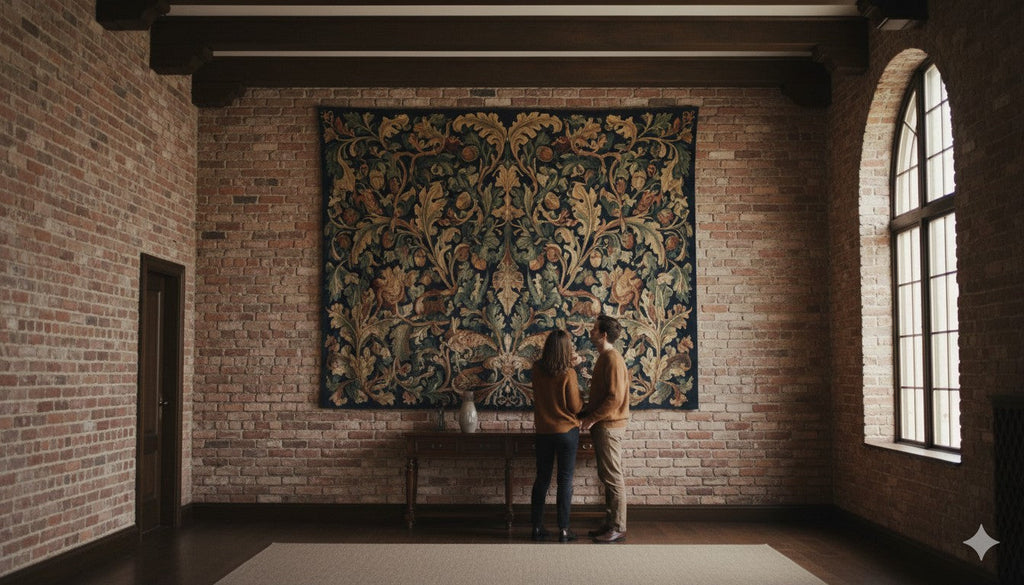
Rooms with distinct architectural details, such as arched alcoves, recessed walls, or exposed brick, can benefit greatly from a well-placed tapestry. Instead of hiding these features, the tapestry draws attention to their shape and texture, turning them into intentional design highlights.
How to style it:
● Over brick or stone: Use a tapestry to soften hard edges and introduce warmth and contrast.
● Within alcoves or recesses: Add depth and visual intrigue while preserving the feature’s natural charm.
This approach celebrates the room’s unique architecture, blending structure and art into one cohesive statement.
Choice suggestion: Italian tapestries and Renaissance wall art go very well with brick walls due to a perfect color match that makes you feel like you’re going back in time for a few centuries.
Beyond Basic Placement: Considerations for Impact

While selecting the right spot is crucial, maximizing a tapestry's impact also involves deeper considerations about its presentation and care.
Lighting Your Tapestry
Effective lighting is key to showcasing a tapestry:
● Natural light: Ideal, but avoid direct, prolonged sunlight to prevent fading.
● Artificial lighting: Adjustable picture lights or track lighting with angled spotlights work well.
● Light type: Warm LED lights are preferred (energy-efficient and UV-safe).
Pro Tip: For large, detailed tapestries, try washing the wall with light from both above and below. This technique, often used in museums, reveals hidden nuances and adds a three-dimensional effect.
Hanging Methods for Different Effects
The way a tapestry is hung affects its visual impact:
● Classic look: Traditional rod and finial sets, ideal for larger, heavier pieces.
● Contemporary look: Hidden hanging systems like Velcro strips or tension rods allow the tapestry to float slightly off the wall, minimizing visual distraction.
For an in-depth guide, remember to read our guide on hanging tapestries on walls the right way.
Proportionality and Balance
Maintaining scale and balance ensures a harmonious display:
● A tapestry should fit the wall space and relate to nearby furniture.
● Too small: Looks lost; too large: Overwhelms the room.
● Example: Above a console table, aim for a tapestry about two-thirds the table’s width.
In general, tapestries look best when centered on a wall or within a designated wall section, allowing for adequate negative space around them.
Find the Tapestry to Fill Your Walls With Now!
Tapestries are more than just wall coverings; they are historical narratives, artistic expressions, and profound decor elements. One thing is for sure: the placement of a tapestry is a critical decision.
This decision influences the entire ambiance. Always remember to embrace the opportunity to let a tapestry tell its story within your home, inviting warmth and wonder into everyday living.
To make your home truly come alive, check out Home Decor Tapestries today and find your next piece of artwork!