How to Mix Vintage Tapestries with Modern Interiors
Design trends come and go, but the art of weaving history into modern living never fades.
Vintage tapestries, rich in texture, pattern, and heritage, offer a timeless charm that modern interiors often lack. When placed thoughtfully, these pieces bridge the gap between tradition and innovation, turning minimalistic rooms into warm, storied sanctuaries.
In this article, you’ll find all the necessary suggestions for successfully mixing vintage tapestries with modern interiors. Read on and let us help you decorate your home!
6 Easy Steps to Help You Mix Vintage Tapestries with a Modern Interior
Blending vintage tapestries with modern interiors is all about creating balance and letting heritage and innovation coexist beautifully.
With the right approach, these woven masterpieces can bring depth, warmth, and timeless character to even the sleekest contemporary spaces.
Here are the 6 steps:
● Choose the right vintage tapestry
● Integrate it seamlessly into modern design
● Master color and contrast
● Blend with furniture and accessories
● Find room-specific inspiration
● Hang and care for your tapestry properly
Step 1: Choosing the Right Vintage Tapestry
Selecting the right tapestry is not merely about decoration; it’s about storytelling. Consider what emotion you want your space to convey: serenity, grandeur, romance, or rustic comfort.
The choices are endless; from Belgian tapestries that embody intricate craftsmanship and quiet sophistication to medieval tapestries that infuse your space with narrative depth and historical grandeur.

Match Your Mood to the Motif
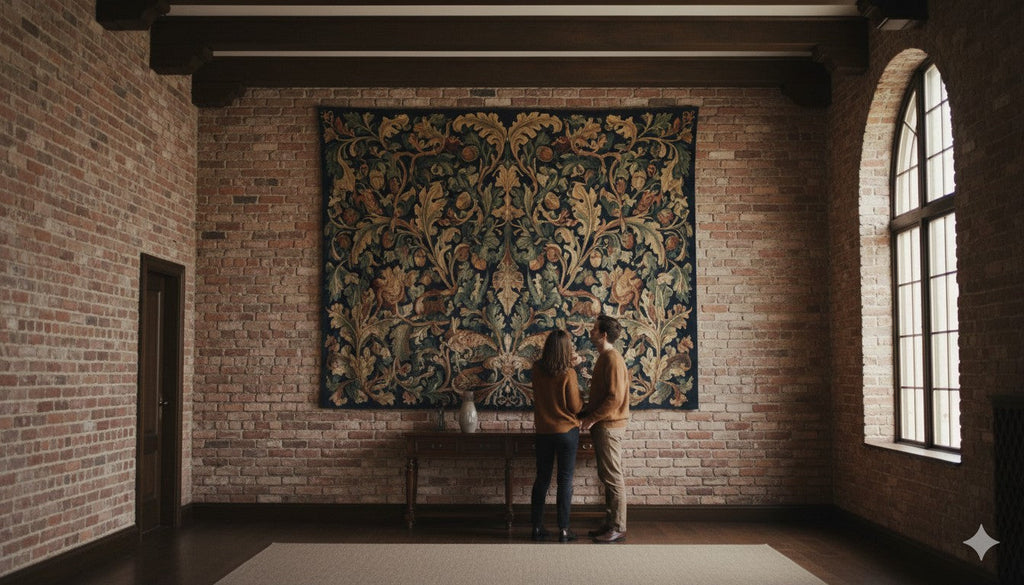
If your living space is neutral and airy, a nature-inspired piece like the Tree of Life by William Morris adds subtle vibrancy and organic texture.
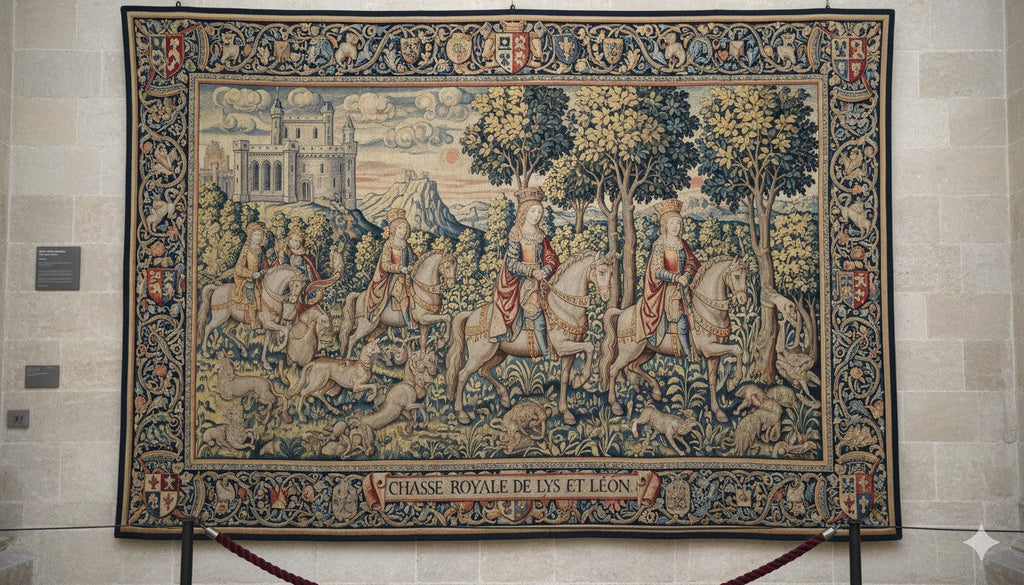
For rooms that need drama, explore historical or mythological designs such as the Bayeux Duke of Normandy Wall Tapestry, which acts like a mural that tells a story across centuries.
If your décor leans industrial or Scandinavian, opt for floral tapestries and botanical patterns that soften sharp lines and cold materials like steel or concrete.
Color Harmony
Tapestries often feature earthy tones, sage, terracotta, and ochre that blend well with modern palettes. When selecting, identify two or three colors from your tapestry to echo in accent pillows, rugs, or ceramic décor. This subtle repetition creates visual cohesion.

Proportion and Placement
Scale is crucial. Large walls demand bold tapestries, while smaller spaces benefit from narrower vertical designs. In general, the tapestry should cover at least two-thirds of the width of the furniture it hangs above, ensuring it feels intentional rather than floating.
Step 2: Integrating Tapestries into Modern Design
Once you’ve chosen your tapestry, the magic lies in how you integrate it. The goal isn’t to make it blend in but to make it belong.
Imagine a minimalist living room with white walls, polished concrete floors, and a neutral sofa.
Now, add the Verdure Aux Oiseaux Wall Tapestry, a lush forest scene woven in soft greens and golds. A similar effect can be achieved with the majority of Verdure tapestries.
And just like that, the room gains warmth, history, and soul without sacrificing its modern character.
Also, green tapestries are especially effective in work environments, so if you are looking to decorate office walls with tapestries , green art pieces will not let you down.
Here’s how to achieve that effect:
● Anchor It as a Focal Point - Hang your tapestry on a primary wall, above a sofa, bed, or dining table.
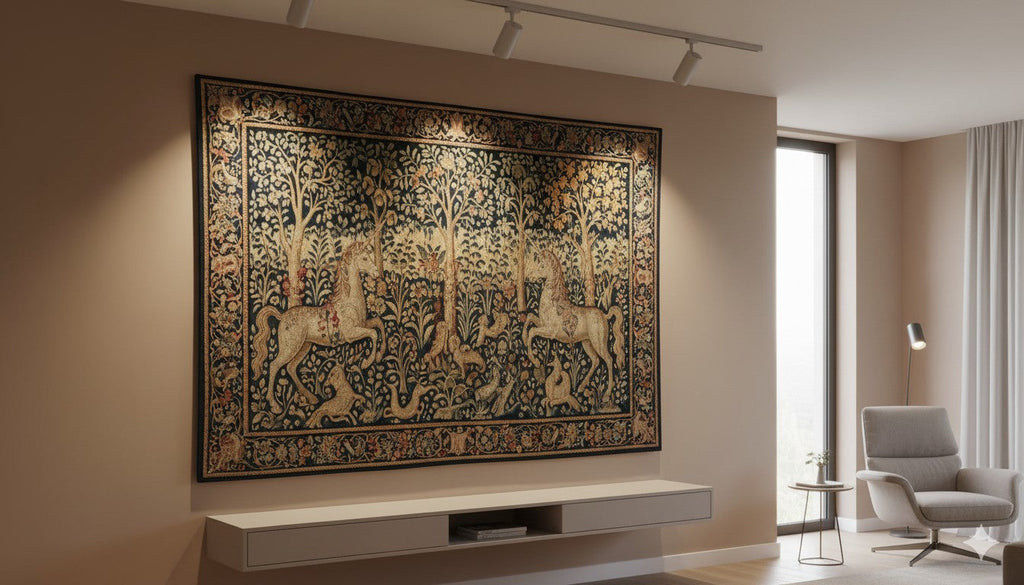
● Use Lighting Strategically - Soft wall-mounted lights or adjustable track lighting can bring out the weave’s texture and colors.
● Layer Textures, Not Patterns - Combine the tactile richness of the tapestry with smooth or matte finishes elsewhere, linen drapes, wooden furniture, and ceramic accessories.
Step 3: The Art of Color and Contrast
Color defines mood, and when working with vintage pieces, balance is key. A dark, richly hued modern tapestry in a bright, modern room adds gravitas. Conversely, a light, neutral tapestry can calm a room filled with bold modern colors.
|
Room Type |
Tapestry Recommendation |
Effect Created |
|
Minimalist Loft |
Earth-toned Renaissance or botanical design |
Adds warmth and dimension |
|
Monochrome Bedroom |
Muted beige or gold medieval piece |
Softens the stark contrast |
|
Colorful Studio |
Simple nature-themed tapestry |
Brings focus and cohesion |
|
Industrial Living Area |
Historical scene with deep reds/blues |
Introduces richness and nostalgia |
If your space features cool modern tones, grey, white, or black, choose tapestries with warm undertones like rust, ochre, or olive to balance the temperature. Conversely, if your modern furniture includes warm woods or beige, pick tapestries with cooler hues to create depth.
Step 4: Blending with Furniture and Accessories

The best interiors feel curated, not copied. To mix eras gracefully:
● Repeat Subtle Details: If your tapestry has gold threads or floral borders, mirror those tones in metallic frames or soft florals on your coffee table décor.
● Contrast Shapes: A rectangular tapestry pairs well with round mirrors or sculptural lamps, balancing geometry.
● Limit Competing Artwork: Knowing how and where to put tapestry in a room is not as easy as it sounds. Avoid hanging multiple busy artworks near the tapestry. Instead, let it be the visual storyteller, with simpler supporting pieces around it.
● Combine Old with New Materials: Pair your tapestry with sleek leather chairs, minimalist metal stands, or glass coffee tables for a refined contrast that feels both grounded and modern.
This combination creates harmony, a living conversation between centuries, textures, and styles.
Step 5: Room-Specific Inspirations
Each room in your home tells a different story, and this is exactly why tapestries have become trendy again - They are able to fit in with any of your room stories perfectly.
Whether you're inspired by historical grandeur or minimalist serenity, the key lies in balance.

Living Room
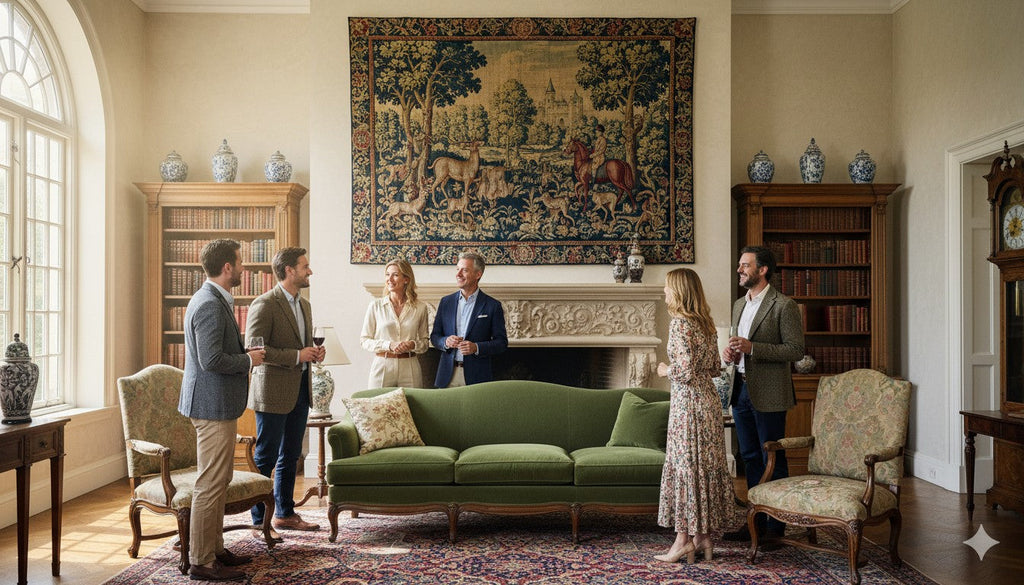
The living room is where conversation and comfort meet. For example, hanging a large French tapestry above your sofa sets a tone of sophistication. Complement it with neutral seating and a soft area rug to ground the look.
Bedroom
Replace a traditional headboard with an ornate tapestry. The Tree of Life by William Morris works beautifully here, creating a serene focal point that exudes calm and artistry.
Dining Room
Add visual texture with a landscape or wine tapestry to create a cozy, welcoming dining experience.
Our suggestion would be a piece like the Tuscany Landscape Tapestry, which will undoubtedly add necessary warmth to minimalist dining sets.
Entryway or Hallway
Use vertical designs or panoramic tapestries to elongate small spaces visually. Pair with modern sconces and a sleek console table to create a sophisticated first impression.
Step 6: Proper Hanging & Care
To preserve the elegance of your tapestry, installation matters. Here are some actions you need to take to ensure the safety of your beloved piece.
● Always hang tapestries with a sturdy rod and finial system; avoid nails or tacks that can distort the weave.
● Keep about 6-8 inches of space between furniture and the tapestry's bottom edge.
● Avoid direct sunlight, as UV rays can fade fibers over time.
● Vacuum gently once a month using a soft brush attachment.
● If your tapestry is particularly delicate or antique, consider a backing liner for added protection and structure.
● These small acts of care ensure your piece remains timeless, both in design and durability.
Mixing Vintage Tapestries and Modern Interiors with Confidence and Pride
Blending vintage tapestries into modern interiors isn’t about nostalgia; it’s about balance. It’s where past craftsmanship meets present minimalism to create spaces that feel soulful, layered, and utterly personal.
A carefully chosen tapestry from Home Decor Tapestries can transform even the most minimalist setting into a place of warmth and storytelling.
Whether it’s a medieval battle scene, a botanical garden, or an abstract woven artwork, these pieces remind us that beauty doesn’t fade; it evolves. Bring one home, and you’ll discover that history can live gracefully in the modern age.