Why Wall Tapestries Are Making a Comeback
Tapestries disappeared from mainstream interiors for decades, relegated to dorm rooms and bohemian lofts while sleek prints and canvases dominated design magazines.
Then something shifted.
Suddenly, these woven textiles started appearing in minimalist apartments, modern farmhouses, and even corporate lobbies.
Understanding why wall tapestries are making a comeback requires looking beyond surface-level trends to examine what's changed about how people live, work, and experience their environments.
The Comeback of Wall Tapestries: Why Now?
The resurgence of wall tapestries isn't happening in a vacuum. Several converging factors have created the perfect conditions for these textiles to reclaim their place in contemporary interiors.
Open-Plan Living Demands Better Acoustics

Modern architecture loves tearing down walls, but those expansive open-plan spaces come with a hidden cost: terrible acoustics. Sound bounces off hard surfaces, wood floors, glass windows, and exposed concrete, creating echo chambers that make conversations exhausting and Netflix subtitles necessary.
Tapestries absorb sound in ways that framed art simply cannot. Traditional French tapestries, known for their dense weaves and textured depth, excel at trapping sound waves and softening harsh acoustics without the need for visible soundproofing.
The woven textile construction traps sound waves, softening harsh acoustics without requiring expensive acoustic panels that scream, "I have a sound problem."
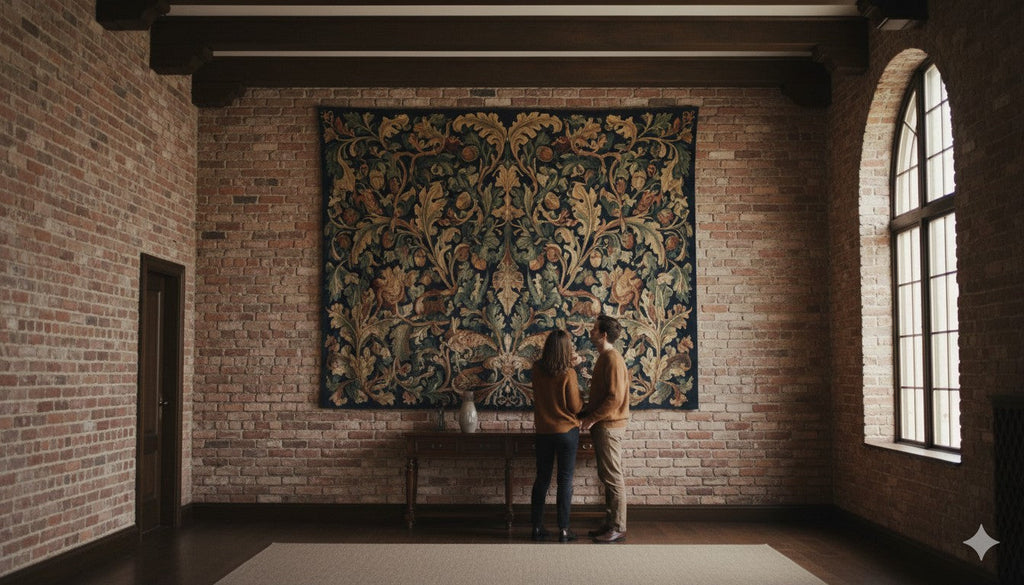
A large tapestry behind a sofa or spanning a dining room wall can reduce echo by 30-40%, transforming how a space feels without anyone consciously noticing why it suddenly seems more intimate.
Pro Tip: Check our guide, and learn more about how to mix vintage tapestries with modern interiors .
The acoustic benefits extend beyond just noise reduction:
● Reduces reverb time in rooms with high ceilings
● Softens conversational tones in hard-surfaced spaces
● Creates auditory comfort that makes rooms feel more inviting
● Provides functional sound dampening that looks intentional, not industrial
The Texture Deficit in Contemporary Design
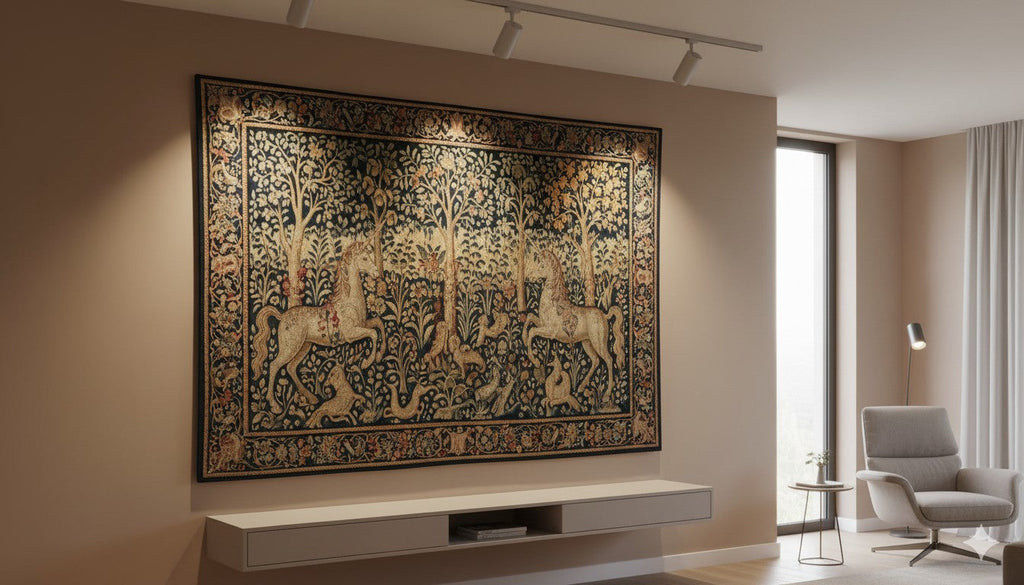
Minimalism dominated the 2010s, leaving homes visually stunning but often emotionally cold. Clean lines, neutral palettes, and streamlined furniture created spaces that photographed perfectly but could feel sterile to actually live in.
People began craving sensory richness; something tactile to break the monotony of flat surfaces.
Tapestries deliver texture in abundance:
● Their woven construction creates dimensional depth that shifts with viewing angle and lighting.
● Unlike printed canvas or framed photos, tapestries invite touch, cast subtle shadows, and move slightly with air currents.
● This physical presence brings life and warmth to spaces dominated by hard, static surfaces.
Design psychologists note that environments lacking textural variety can feel cold or disconnected.
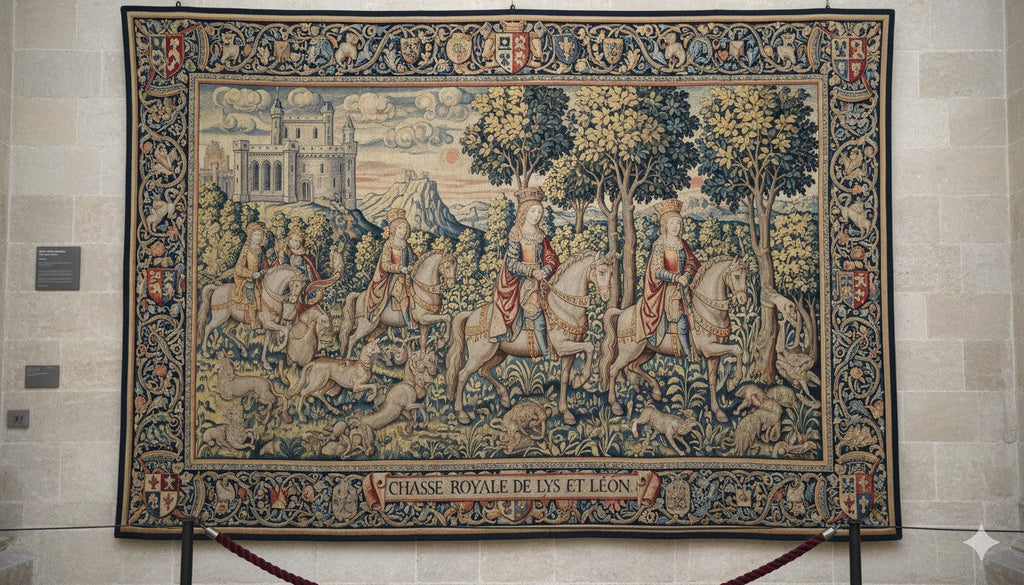
Introducing textile elements, especially large-scale pieces like tapestries, helps make a space feel human-scaled, inviting, and approachable - just as Middle Ages tapestries once warmed vast stone halls with color, softness, and storytelling.
Remote Work Changed How We Experience Our Homes

The shift to remote work revealed that most homes were not designed for 8 to 10 hours of daily occupation. Blank walls that felt fine evenings and weekends suddenly became oppressive during long Zoom calls. People wanted their spaces to feel finished, professional, and intentional.
Why tapestries became a go-to solution:
● Instant transformation: One tapestry can change an entire wall with minimal effort.
● Simpler than alternatives: No need for multiple gallery pieces or complicated wallpaper installation.
● Video call ready: Adds visual interest behind speakers without distraction.
● Glare-free: The textile surface prevents glare and softens lighting.
● Depth and texture: Patterns create dimension without competing with the scene.
Compared to busy wallpaper or cluttered shelves, it’s clear why remote workers embraced tapestries for home offices.
Sustainability and Slow Decorating
Fast furniture and disposable décor have lost their appeal. People increasingly question the environmental cost of buying cheap art that ends up in landfills within a few years.
This shift toward conscious consumption naturally favors tapestries. Belgian tapestries, woven in the same regions that defined European textile art for centuries, embody everything slow decorating stands for:
● Longevity: Quality tapestries last decades, even centuries, with proper care
● Craftsmanship: Woven textiles require skilled production, supporting artisan traditions
● Timelessness: Classic designs transcend trend cycles
● Versatility: Tapestries move easily between rooms and homes, adapting to evolving styles
The "buy it for life" mentality extends beyond products to experiences. Investing in a significant tapestry feels more meaningful than acquiring another mass-produced canvas print. There's weight to the decision (literally and figuratively) that aligns with growing desires for intentional living.
Not sure where your tapestry will have the most impact? Explore our guide on where to put a tapestry in the room for inspiration and practical tips.
Social Media Rewarded Visual Distinctiveness

Social media rewards distinctive, eye-catching elements, and tapestries deliver that instant visual hook. A striking textile can create a signature moment that makes interiors memorable.
Why design influencers embraced tapestries:
● Photogenic texture: Woven surfaces read beautifully on camera, creating depth that flat art cannot match.
● Bold scale: Large tapestries make a statement without needing multiple pieces or complicated styling.
● Content multiplier: One well-chosen tapestry generates more content opportunities than many smaller items.
● Perception shift: Frequent appearance in aspirational posts associated tapestries with elevated design sensibility, turning what was once considered dated into something desirable.
This visibility shows how social media can quickly influence taste, making tapestries a popular choice for modern interiors.
The Wellness Movement Embraced Softness
Wellness culture’s focus on creating calm, restorative spaces aligns perfectly with tapestries’ qualities. The textile surface radiates warmth, absorbs sound, and provides visual richness that encourages reflection or meditation.
Why tapestries work in wellness-focused design:
● Soothing texture: Soft textiles contrast with hard surfaces to make spaces feel inviting and comfortable.
● Natural motifs: Landscapes, botanicals, and organic patterns bring biophilic elements indoors. A verdure tapestry brings nature indoors more convincingly than framed photography, while floral designs add biophilic elements without maintenance requirements.
● Low-maintenance greenery: Verdure or floral designs add nature-inspired details without upkeep.
● Psychological benefit: Soft, tactile environments reduce stress and promote relaxation.
● Visual focal points: Tapestries create areas for meditation, reflection, or quiet focus.
By combining aesthetic appeal with emotional comfort, tapestries bridge the gap between design and wellness.
Affordability Meets Impact
Compared to other large-scale art, quality tapestries offer incredible value.
● Original paintings or commissioned pieces of similar size can cost exponentially more.
● Large-format photography often requires expensive printing and framing.
● Tapestries provide museum-quality visual impact at a much more accessible price.
This accessibility is significant. People who couldn’t previously afford statement art can now create gallery-worthy interiors. It also broadened tapestries’ appeal beyond traditional collectors to younger homeowners, renters, and first-time decorators, all looking to make a big impact on a limited budget.
Cool Tapestries for Guys

Now that we know why tapestries aren’t going out of style anytime soon, let’s look at some of the best options for guys who want to upgrade their space without going overboard.
So, here are some of the best tapestry options guys should consider to decorate their space:
● Belgian Tapestry - Perfect for adding heritage depth to walls.
● The Card Players French Tapestry - Adds vintage game-night mood to any wall.
● Chenille Globe European Tapestry - Ideal for maps and nautical-themed tapestries.
● Orbis Terrae Belgian Tapestry Wall Hanging - Global-map motif, bold accent for a refined wall.
● Country Scene Belgian Tapestry - Brings a bold, classic room focal point.
● Battle of Hastings II Belgian Tapestry - History-rich look for large accent walls.
Pair a masculine tapestry with neutral walls, a leather sofa, or an industrial lamp for a sophisticated, lived-in feel. Unlike posters or wall decals, tapestries bring an air of maturity and class while staying effortlessly personal.
Cool Tapestries for Women

For women, wall tapestries are more than decoration; they’re expressions of mood, creativity, and identity.
Here are some tapestry styles and collections worth considering:
● City & Country Tapestries – Capture timeless landscapes and architectural charm.
● Floral & Still Life Tapestries – Bring nature and classic artistry indoors.
● Lady & Unicorn Tapestries – Romantic, historic storytelling in textile form.
● Cafe De La Como Italian Tapestry Wall Hanging – Adds European flair and elegance.
● Beauvais III with Border French Tapestry – Traditional design with a refined border accent.
● Modern Art Tapestries – Bold, contemporary patterns for a vibrant, artistic vibe.
Whether you’re creating a calm sanctuary or a vibrant, expressive space, these tapestries bring comfort, character, and individuality to any room.
Cool Tapestries for Shared Spaces

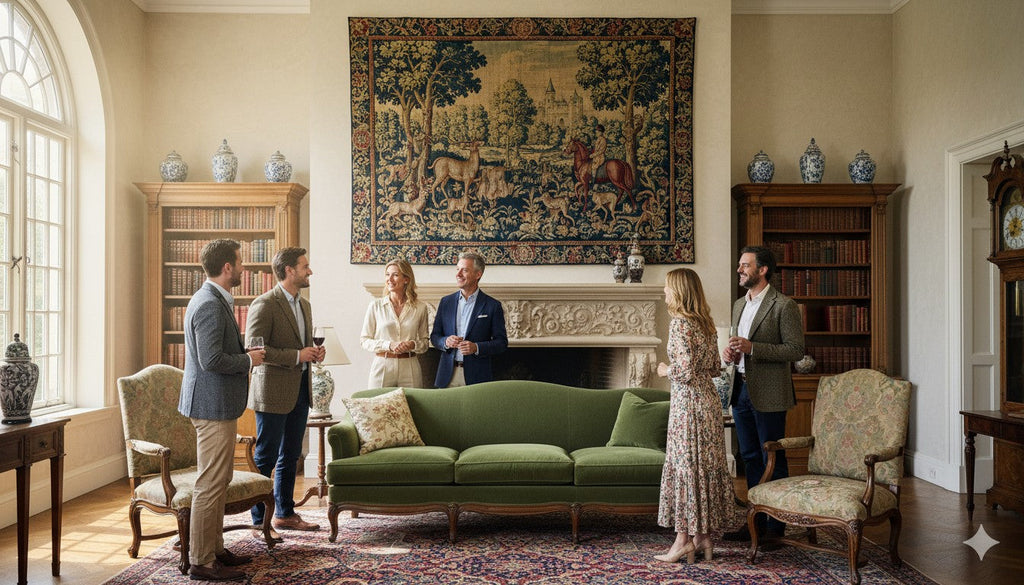
Shared spaces like living rooms, dorms, and lounges benefit from tapestries that create unity and visual warmth. Large woven wall art or abstract, geometric, or landscape designs can instantly elevate the
Some tapestry styles perfect for shared areas include:
● Animals, Birds & Wildlife Tapestries – Bring nature and energy into communal spaces.
● City & Country Tapestries – Offer timeless landscapes and architectural charm.
● The Bridge Fine Art Tapestry – Classic artwork reimagined in woven form for shared spaces.
● Medieval Tapestries – Rich patterns and narrative scenes for a bold focal point.
● People Tapestries – Character-driven designs that spark conversation.
● Holiday Snowman Italian Tapestry Wall Hanging – Seasonal charm for festive gatherings.
These pieces tie together different décor styles, making shared spaces inviting, cohesive, and full of life, whether in a home, student apartment, or family gathering area.
Make Your Space Memorable With a Statement Tapestry
Wall tapestries are more than just fabric on the wall; they’re storytelling, texture, and emotion woven together. Their comeback is not a passing trend but a celebration of artistry, culture, and individuality. They allow you to create spaces that feel alive, layered, and deeply personal.
So, whether you’re searching for a bold statement tapestry for your living room, a romantic piece for your bedroom, or a wall hanging for a masculine space, you’ll find your perfect match at Home Decor Tapestries.
Discover how a single tapestry can breathe new life into your home and join the growing community of design lovers bringing this timeless art form back where it belongs: on our walls.